


Welcome back to another Wizard of Claws interview!
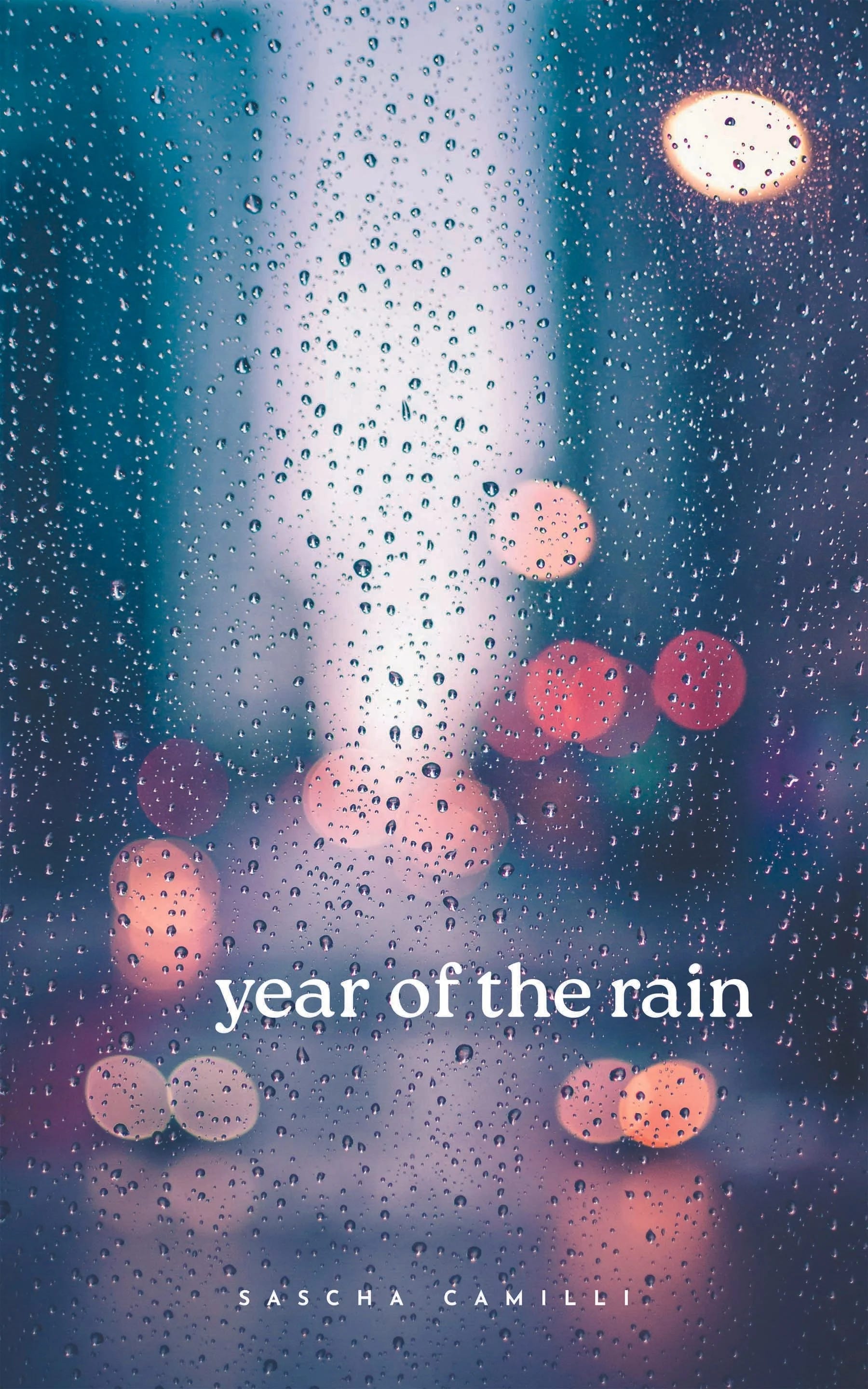
I’ve been following Sascha Camilli since I became active on Substack a couple of years ago. I love learning about how other writers write, so I knew that whenever Sascha published the novel she’d been working on, I’d want to pick her brain. And now I have that opportunity! Her debut, Year of the Rain, follows Astrid and Diego after they move to London in 2015 to follow their dreams — Astrid in fashion and Diego in music. Their relationship is tested throughout the story’s many ups and downs, and there’s a beautiful sort of normalcy and relatability to such struggles.
As you’ll see in my questions below, we have a lot of ground to cover in this interview, so let’s get to it!
General Questions
Can you share a little bit about yourself, including how you came to care about animals, creative writing, and fashion?
I have always been passionate about animals. Since I was a little child, their suffering has affected me greatly. I cried whenever I thought animals were hurt or sad, and that’s something that stayed with me as I grew older. I stopped eating meat when I was eleven, though it took me much longer to go fully vegan.
I’ve been writing since I was a little child too. During the less interesting classes at school, I’d secretly write short stories. I’d also sit and write whenever I had any free time. Strangely, during my childhood I never considered writing as a career option. It was just something I enjoyed doing.
Fashion wasn’t something that was on my radar until much later. In my early twenties, when I realised I probably didn’t want to be an actor, I didn’t know what to do with my life so I moved to Florence and got a job in a lingerie shop. It was there that I first became enamoured with textiles, colours, combinations. When I found out there was a fashion school nearby, I applied to study marketing. But along the way, I definitely had a point where I fell out of love with fashion. Today, I like to say I’m passionate about clothes and personal style, rather than the fashion industry.
You’re also a writer on Substack. What kind of content can readers expect from Kind of Wild?
I’m still figuring it out, my writing is a bit of a chameleon — my voice changes drastically from one day to another. But at its heart, Kind of Wild is about trying to make the world a better place while never sacrificing enjoyment and pleasure. I’m so tired of the idea of the self-erasing activist who “works tirelessly” around the clock, wears boring clothes and only eats dried leaves. I’m a natural-born hedonist, I love experiencing the world — and I don’t think it necessarily has to go against my desire to do good in the world. My newsletter is full of guides to good vegan food around the world, but it also grapples with the environmental dilemma of getting on airplanes. Kind of Wild will give you tips on secondhand shopping and give you advice on the best plant-based leathers. It will warn against visiting marine parks and inspire you to spend the day at an animal sanctuary. It’s a mix of many things, high and low, serious and frivolous.
Are you a plotter or a pantser?
Today I’d say I’m a plotter. I need to know where the story is going, then I can let my words fly free. So I tend to have an outline and then loosely follow it, allowing myself to go off-script if I feel like it. But when I started writing Year of the Rain, it really was one small chapter at a time, sometimes fully disconnected from each other. It took years for all of those small pieces to come together.
Story Questions
Rain is often used to symbolize sadness, darkness, and grief, but rain is also restorative. Life cannot exist without it. What does the book’s title, Year of the Rain, mean to you?
I use rain in different ways to create a frame for the story. For us foreigners, rain is something that’s very much connected to the UK — it’s almost a symbol of living in England. Beyond that, I’ve tried to show that rain doesn’t have to have that dark, saddening atmosphere to it. It can also be cosy, comforting, a natural presence that can be calming and soothing. Rain can also stand for newness and shedding old layers. In the prologue, as one of the characters is moving out of their flat, the rain outside symbolises change and renewal — which is one of the main themes of the book.
Even though the novel isn’t about animal rights, veganism is an important part of Astrid’s character, and there are several moments throughout the book when she (and Diego, for that matter) reflects on what happens to animals or has uncomfortable interactions with non-vegans. Why did you feel it was important to include those little moments in the story?
I wanted to write vegan characters without the story focusing on their veganism. Most vegans I know are vegan without it being their whole identity — that’s how they exist in the world, and I wanted it to be just one of the things we know about Astrid. The uncomfortable interactions with non-vegans are part of every vegan’s journey, and I know people would relate to it — but it also symbolises the little frictions that are part of being an immigrant. Sometimes the frictions arise between immigrants and locals, other times they arise between immigrants and other immigrants, like it happens in the book several times. And those frictions can lead to tension between you and the person closest to you, indeed Astrid and Diego argue about veganism. There are several scenes where veganism symbolises them getting closer together or drifting apart, and it was interesting to me to use it in that way.
At an anti-Brexit march, Astrid thinks about how protests are “the place you go to shout your desperation at the world’s blatant way of throwing injustice in your face.” She feels united with her fellow protestors, joined together in that moment of shared rage and hope. What roles do grassroots activism and hope play in your own life?
I got into animal advocacy through grassroots movements. I marched against fur as a teenager in Sweden. I wore a “no animal testing” pin on my silver backpack (next to my Spice Girls pin!). When I moved to Italy, I spent my evenings blogging for a small animal shelter. Even today, I get involved when I can — I was in a grassroots protest in London just last month. And of course I’ve been to a few anti-Brexit marches. Getting together to protest, to raise your voice alongside others, is incredibly powerful when it comes to soothing your inner hopelessness. During that time, just after the Brexit vote, so many EU migrants in the UK felt so powerless. The roots we’d so carefully just begun to plant were all of a sudden yanked out from under us. So getting together and making our voices heard, voicing our dissent, was so empowering. I wanted to show how Astrid and Alexia channel their desperation and their feeling of uncertainty in joining together and getting loud.
After the Brexit vote, Astrid and Diego see just how inhuman many Londoners think immigrants are. Though no one uses speciesist language against them, it’s not uncommon for immigrants to be called invasive, vermin, pests, rats, etc. The use of language like this is predicated upon the (mis)understanding that animals are inherently inferior to humans. Do you think reshaping the way we talk about animals is an essential step to reducing all forms of prejudice, or is that just asking too much of people?
There is a section in the book where Diego and his colleagues discuss the term “pigs” as referring to Mediterranean migrants. Diego thinks about how Astrid would remark on speciesist language and notes how the terminology would impact her less, since she is Swedish and hence considered a “good” migrant. But at the same time, his South American colleague is there to remind him that being referred to as an animal is a pretty minor problem and that European migrants are still viewed quite favourably. I wanted to show how we group people into different categories, sometimes unconsciously — and how that relates to the way we see animals. If we learn to not use “pig”, “pest”, or “vermin” as negative language, we won’t refer to people that way either, which may be a step forward in creating more understanding between all of us.
Seeing as Diego’s a musician, there are many references to classic rock and musicianship throughout the novel, and Astrid talks often of her love of Friends. (I can relate.) In what ways do other forms of art inspire you?
It was important to me to infuse the novel with creative expressions — it also helped to really bring those characters to life. To me personally, books are the most obvious art form that never ceases to inspire me. I would never have started writing this novel if it wasn’t for Daisy Jones and the Six by Taylor Jenkins Reid — a book that’s written in a completely different way from anything else I’d read before. My book is nothing like it (I would never compare myself to the genius of Taylor!) but reading it widened my idea of writing a novel. When I read it, I realised that there could be a different way to tell a story. I could write a book made up of small scenes rather than long, chunky chapters. I could have characters coming from different countries and cultures. I could write in English without being English. It showed me that anything was possible.
Humans are heavily influenced by the people around us, and because most people aren’t vegan, most people aren’t vegan. In order to change people’s behaviors, we have to change the culture. And pop culture plays a big role in that, as we’ve seen with the enormous success of octopus books and movies and subsequent legislation protecting octopuses. What role do you see vegan literature — that is, stories with vegan characters that aren’t treated as jokes and stories with vegan themes — playing in the normalization of animal rights ideas?
I think it’s absolutely fundamental to have stories where characters are vegan without succumbing to the trope. It’s so important to see vegans who aren’t hippies, earthy “dance under the full moon” types, or anything stereotypical like that. Portraying vegans like we would any other character normalises veganism and allows for a different view of vegans, bringing non-vegans closer to the concept of veganism. If that character in the book or film is “just like me” and they are vegan, then maybe it’s not such a crazy idea to be vegan after all. It opens up possibilities.
Fashion, like food, is essential. As one of Astrid’s tutors says, “Clothes are how you show the world who you are. Fashion is our most immediate means of communication.” Given the enormous amount of waste in the industry, not helped by the fact that fast fashion is only getting faster, what are some simple steps people can take to shop more sustainably?
Astrid grapples with the idea of fashion as a form of destruction throughout the story. She’s a gifted designer and has won awards, yet the excess and harm of the industry weighs on her. It mattered a lot to me to include scenes where she shops second-hand, for example when her flatmate takes her to explore London’s charity-shop scene. It’s a sign of the times, as that time, around 2015, was when charity shops started becoming “cool” and second-hand fashion began to rise. Shopping second-hand is the best thing we can do for the environment — using what’s already in circulation helps halt waste. Overproduction is behind most issues connected to fashion, and by using what we already have, we can slow down the cycle of constant new clothes being produced just to be discarded.
Anti-fur protests have been a huge part of the animal rights movement for decades, and due to that work, fur is now becoming less and less culturally relevant. What animal-based material do you think will/should be the next target for activists, and what lessons can activists learn from the anti-fur movement?
Wild-animal skins are going the same way as fur and disappearing from fashion. But they were such a niche market anyway that most people aren’t likely to notice that they are gone. Not many consumers can afford the sky-high price tag of these materials — whereas feathers, which are still very prominent in garments such as outerwear (down) but also feather boas and stoles, are much more in common use. Feathers come with the same issues as fur: animals are routinely abused, violently killed, and held in conditions that are detrimental to their well-being. My workplace, animal rights organisation PETA, has launched a Feather-Free Pledge where designers, retailers and Fashion Week events promise not to work with feathers, which is a very powerful step.
If you could turn one designer vegan, dead or alive, who would it be?
Oh, I’d love to see Fendi shun those furs for some bio-based plastic-free vegan options from the likes of Ecopel or BioFluff!
Jobs in the arts, like fashion or music, are often seen as so glitzy and glamorous as to be unattainable, and many people with dreams of such careers ultimately choose something more practical and secure instead. But Astrid and Diego continue to follow their hearts despite the setbacks, long after even their mentors told them to give up. What do you hope readers will take away from this story about following their dreams?
To always check in with yourself and ask yourself why this dream is important, and what part of it is important. Diego struggles with finding the courage to perform his own music, hiding behind his technical abilities to only play covers. But the fact that he is a musician is so strong within him that not much can shake that conviction: in some way music will always be a huge part of who he is. Sure, he has doubts about how he’ll go about things. But where he’s going is crystal clear.
I also hope readers can see this as an ode to doing what you love even if it’s not on a massive scale. Diego goes busking in the first part of the book. Then, he moves on to performing in a pub. He’s not on a massive stage or on TV. He doesn’t have tons of followers or a huge audience. But the joy of following his passion is still there. Perhaps even more so.
Final Questions
How can readers find you and your work online?
The only social media I am on is Instagram: @saschacamilli. I’m of course also on Substack: saschacamilli.substack.com
My website is saschacamilli.com — samples of my written work and info on both my books can be found there.
Any upcoming projects?
Lots of stuff in the works — watch this space!


Thanks so much for having me, Elise! This was one of the most thoughtful interviews I've done, these questions were so well-crafted and a joy to answer. Thanks for reading the book as well, I really appreciate that.